



In presidential governance, the most visible figures are often those who stand before television cameras, address the nation, receive foreign dignitaries or make major policy announcements. Yet behind every functioning presidential office is an extensive network of officials whose responsibilities are rarely performed in the public glare.
Among these roles is that of the Principal Private Secretary to the President, an office that sits close to the centre of presidential administration and involves the coordination of information, schedules, correspondence, briefings, meetings and other official business around the President.
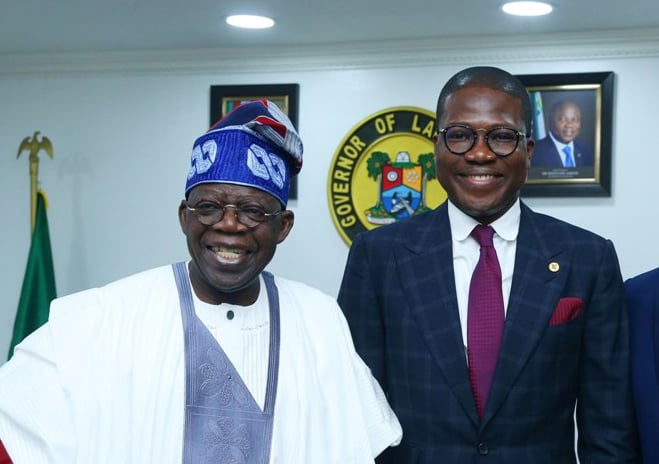
In the administration of President Bola Ahmed Tinubu, that responsibility is held by Hakeem Muri-Okunola, popularly known as HMO. His appointment brought to the Presidency a public servant whose career spans more than two decades across law, administration and government service, particularly in Lagos State.
Muri-Okunola’s career is not simply defined by his senior position at the State House. It also reflects the breadth of administrative experience he accumulated before arriving in Abuja. His professional journey provides an opportunity to examine an often-overlooked component of governance: the quiet institutional work required to support political leadership and translate priorities into organised government action.
As Singapore’s founding Prime Minister, Lee Kuan Yew, once observed: “We, the elected ministers, have to work through you and with you to translate our plans and policies into reality.” The statement captures an important reality of government: political leadership and administrative capacity are interconnected.
A president may establish priorities, announce reforms and set national objectives, but those objectives must eventually move through institutions, officials, documentation, meetings, coordination mechanisms and implementation structures. This is where experienced public administrators become particularly relevant.
Muri-Okunola’s appointment as Principal Private Secretary in September 2023 marked another stage in a career that had already taken him through several levels of public administration.
Before joining the Federal Government, he served as Head of Service of Lagos State, a position he assumed in December 2018. Earlier in his career, he occupied several senior positions within the Lagos State civil service, including service as Executive Secretary of the Lagos State Land Use and Allocation Committee before becoming a Permanent Secretary.
His professional background also included legal practice and earlier government responsibilities. Reports surrounding his appointment to the Presidency noted that he had accumulated more than 25 years of experience spanning law and public service.
Importantly, his relationship with President Tinubu predates his federal appointment. Muri-Okunola previously served as a Personal Assistant to Tinubu during the latter’s tenure as Governor of Lagos State.
That history provides an additional dimension to his current role: familiarity with the workings of executive government, combined with experience acquired through years of service within a structured public administration.
The office of Principal Private Secretary should not be confused with that of the Chief of Staff.
This distinction became particularly relevant in December 2025 when the State House clarified reports suggesting that Muri-Okunola had replaced Femi Gbajabiamila as Chief of Staff. The Presidency stated that the two officials remained in their respective positions.
The clarification matters because the Presidency is not a single office in which every senior aide performs interchangeable duties. Different offices have different responsibilities, and the effectiveness of the institution depends partly on how these responsibilities interact.
The PPS operates within the President’s immediate administrative environment, where the handling of information, documentation, scheduling, communication and official coordination can have major implications for the smooth running of presidential business.
Much of this work does not generate headlines.
That, however, does not make it insignificant.
Presidential governance is often viewed through major speeches, policy announcements, cabinet meetings and international engagements. But between an announcement and an outcome lies an extensive administrative process.
Briefings have to be prepared. Meetings have to be coordinated. Documents have to reach the appropriate offices. Information has to be properly organised. Instructions have to be communicated. Officials have to be brought together. Follow-up actions have to be monitored.
These activities may appear routine from outside government, but they constitute part of the machinery through which executive government functions.
This is why Lee Kuan Yew’s observation about elected leaders working “through” and “with” public servants remains relevant. Political leadership establishes direction; professional administration helps create the systems through which that direction can be pursued.
The PPS role therefore requires discretion, organisation, institutional knowledge and an understanding of how executive government operates.
Muri-Okunola’s experience in Lagos provides useful context for understanding his administrative background.
During his time as Head of Service, he publicly advocated greater digitalisation of government operations. He argued that technology could reduce cumbersome manual processes, improve efficiency and make public services more accessible.
That approach reflected a broader transformation taking place across public administration, where governments increasingly seek to replace slow, paper-based processes with digital platforms that allow citizens and institutions to interact more efficiently.
But digital transformation is not simply about putting government services online.
It also involves cybersecurity, data management, digital literacy, institutional capacity and the willingness of public servants to adapt to new systems.
Muri-Okunola’s advocacy in this area therefore offers an insight into the administrative philosophy associated with his Lagos public-service career: government institutions must continually adapt to changing technology and changing expectations from citizens.
His public-service record also included engagement with procurement and institutional compliance.
In 2022, while serving as Lagos Head of Service, Muri-Okunola spoke about the importance of strengthening procurement systems and ensuring compliance with procurement laws. Around the same period, the Lagos State Public Procurement Agency reported that 107 ministries, departments and agencies had been onboarded onto its e-procurement platform.
Such initiatives illustrate another dimension of modern administration: the need for government processes to become more transparent, structured and accountable.
Procurement may not be as politically dramatic as a presidential speech or a major infrastructure commissioning, but it is central to how public resources are converted into government projects and services.
The quality of administrative systems can therefore have consequences far beyond the offices where those systems are designed.
Muri-Okunola’s work at the State House also takes place against the background of significant economic changes and reforms under the Tinubu administration.
The International Monetary Fund, in its June 2026 assessment, estimated Nigeria’s real GDP growth at 4.0 percent in 2025 and projected 4.1 percent growth for 2026. The IMF also reported that Nigeria’s gross international reserves increased from approximately $40 billion at the end of 2024 to $46 billion at the end of 2025.
Government figures provide another perspective. The Federal Ministry of Information and National Orientation reported that Nigeria’s economy reached ₦441.5 trillion in 2025, compared with ₦309.5 trillion in 2023, while foreign capital inflows reportedly increased from $12.32 billion in 2024 to $23.22 billion in 2025.
These figures should not be attributed to any single presidential aide. Rather, they illustrate the broader economic environment within which the Presidency and the Federal Government are operating.
Government figures reported a decline in inflation from 34.80 percent in December 2024 to 15.69 percent in April 2026, while the IMF reported year-on-year inflation at 15.4 percent in March 2026. Different reference periods naturally produce different measurements, but the broader picture is that Nigeria’s economic adjustment remains an evolving process involving monetary policy, fiscal reforms, food prices, exchange-rate dynamics and global economic pressures.
For the Presidency, managing such an environment requires more than policy announcements. It requires coordination across institutions and sustained administrative follow-through.
The success of any presidential administration cannot be measured solely by the visibility of its political leadership.
Ministers, permanent secretaries, special advisers, technical assistants, private secretaries, civil servants and numerous other officials perform distinct functions within that ecosystem. The effectiveness of the system depends on how well those responsibilities are coordinated.
The Principal Private Secretary is therefore part of a larger administrative architecture surrounding the President.
This makes Muri-Okunola’s background particularly relevant. His career has involved both policy-facing responsibilities and the management of public institutions. He has worked within a state government bureaucracy, occupied senior administrative positions and subsequently moved into the Federal Government’s highest executive environment.
His experience does not, by itself, determine the success of the administration. Nor should individual government outcomes automatically be credited to one aide.
Rather, it demonstrates why professional administrative experience can matter in an environment where decisions must move quickly from the political level into institutional processes.
Former United Nations Secretary-General Kofi Annan once stressed the importance of having talented people in both public and private life. His broader argument reflected the importance of attracting capable individuals into public service and maintaining high standards of governance.
Former South African President Nelson Mandela similarly captured the responsibility of public service when he said: “It’s in your hands to make a difference.”
Both observations point towards the same broader principle: leadership is not merely about occupying a prominent office. It is also about responsibility, competence and service.
For senior public officials working around the President, that responsibility often comes without the visibility enjoyed by elected politicians.
Their names may not appear in every headline.
Their photographs may not dominate social media.
Their work may rarely become a public spectacle.
But the quality of their administrative contribution can still affect how efficiently government operates.
The story of Hakeem Muri-Okunola is, in many ways, a story about the part of government that exists beyond the limelight.
From his early legal and public-service career to his years in Lagos State administration and eventual transition to the State House, his professional journey reflects the movement of an experienced public administrator through different levels of government.
His current position places him close to the centre of presidential administration, where discretion, organisation, coordination and institutional understanding are essential.
Ultimately, however, the value of any administrative office should be measured by outcomes and documented performance rather than visibility.
The public deserves government institutions that work efficiently, communicate clearly, manage information responsibly and translate decisions into functioning systems.
And while it may not always make the headlines, it remains an essential part of how presidential government works.
As Lee Kuan Yew’s words remind us, elected leaders must work with public servants to translate plans and policies into reality. For Nigeria, where the scale and complexity of government continue to expand, that partnership between political leadership and professional administration remains central to the country’s governance story.
Beyond the cameras, beyond the speeches and beyond the political spotlight, there is an administrative machinery that keeps moving.
Hakeem Muri-Okunola’s role as Principal Private Secretary places him within that machinery, and understanding that role offers a broader appreciation of the often-unseen work behind presidential governance.