



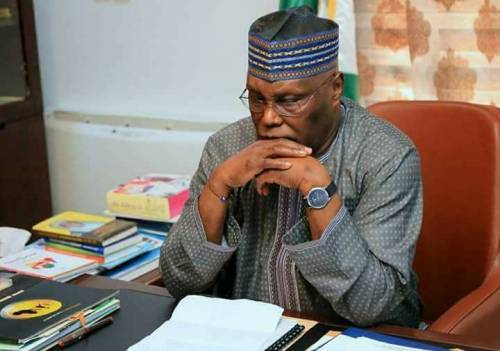
Atiku Abubakar enters the 2027 presidential contest carrying the weight of a long political journey and several previous unsuccessful attempts at the presidency. His 2019 and 2023 defeats remain a major parts of his electoral record, while his decision to describe 2027 as his final presidential bid adds another dimension to the contest.
At the same time, Nigeria’s opposition landscape has changed considerably, with new alliances, competing political interests and other prominent opposition figures making it difficult to assume that anti-APC votes will automatically consolidate behind him.
Beyond his personal political history, Atiku faces the broader challenge of building a sufficiently unified nationwide coalition capable of overcoming the incumbent APC structure. Opposition disagreements, competition for the same voter base and regional political calculations could all affect his campaign.
However, here are the Major Political Challenges Facing Atiku Abubakar on His Final Bid for the Presidency:
1. Repeated unsuccessful presidential bids – He has contested the presidency multiple times without winning it.
2. The 2023 result – He finished behind Bola Tinubu and Peter Obi in the 2023 presidential election.
3. Age and generational politics – He will be 80 around the 2027 election, making generational change an important campaign issue.
4. His own admission that 2027 is his final attempt – This limits his political runway beyond the election.
5. The PDP’s internal divisions have complicated his traditional political base.
6. His departure from the PDP means he is no longer contesting under the party that nominated him in 2023.
7. The ADC is a different political platform from the nationwide PDP machinery he previously relied upon.
8. Opposition coalition difficulties have created uncertainty around the strength of the anti-APC bloc.
9. Peter Obi’s continuing political relevance means opposition votes may not automatically consolidate behind Atiku.
10. Regional competition could make it difficult for him to dominate all geopolitical zones.
11. Northern political competition could divide votes among several influential political figures.
12. South-West electoral competition presents a significant challenge for any opposition candidate.
13. South-East political fragmentation means Atiku cannot automatically assume every opposition vote.
14. South-South competition could further divide the opposition electorate.
15. The APC has an established national political structure, while Atiku’s current platform is comparatively newer.
16. Incumbency advantage gives the governing party access to an established political and administrative network.
17. Tinubu’s political base remains a major factor in the 2027 contest.
18. The APC’s ability to mobilise across states presents a structural challenge to opposition candidates.
19. The opposition’s inability to maintain one unified platform could split votes.
20. Coalition negotiations have already experienced setbacks, according to reporting on the opposition alliance.
21. Atiku’s long political career exposes him to extensive scrutiny over his past decisions and alliances.
22. His record as former vice-president will remain central to campaign debates.
23. Past campaign promises can be revisited by opponents during the 2027 campaign.
24. His association with successive political coalitions provides opponents with material for campaign criticism.
25. The 2027 election will inevitably be compared with his previous campaigns.
26. His 2019 defeat remains part of his electoral history.
27. His 2023 defeat remains more recent and therefore particularly relevant.
28. Younger voters may prioritise generational change in their assessment of presidential candidates.
29. Nigeria’s large youth population makes youth-oriented campaigning important.
30. Atiku faces candidates and political figures from younger generations.
31. The opposition must convert dissatisfaction with the government into actual votes, rather than simply relying on criticism of the incumbent.
32. Economic arguments alone may not guarantee electoral support.
33. Security remains a major electoral issue, requiring candidates to present convincing and credible solutions.
34. His proposal to restore targeted fuel subsidies has generated political controversy.
35. The subsidy debate gives opponents an opportunity to question the sustainability of his economic programme.
36. Different voter groups may have conflicting expectations about economic reform.
37. Northern voters are not a single voting bloc, despite Atiku’s longstanding political presence in the region.
38. South-West voters are also politically diverse, making regional assumptions unreliable.
39. Religious identity alone cannot guarantee electoral support.
40. Ethnic identity alone cannot guarantee electoral support.
41. Personal political networks do not automatically translate into presidential votes.
42. A presidential campaign requires nationwide organisation, not just strong support in selected states.
43. The ADC must demonstrate effective nationwide mobilisation.
44. The opposition must protect its votes at polling units, a challenge Atiku himself has highlighted.
45. Campaign unity will be crucial because divisions can dilute opposition votes.
46. Candidate-to-candidate competition within the opposition could become decisive.
47. The electorate’s assessment of the Tinubu administration will heavily influence the contest, meaning Atiku must persuade voters that his alternative is preferable.
48. His political longevity can be interpreted differently by different voters – some may see experience, while others may prioritise generational transition.
49. His decision to make 2027 his final presidential attempt creates a clear political deadline.
50. Ultimately, no candidate can be declared certain to lose before voters cast their ballots; the constitutional and electoral process determines the outcome.