



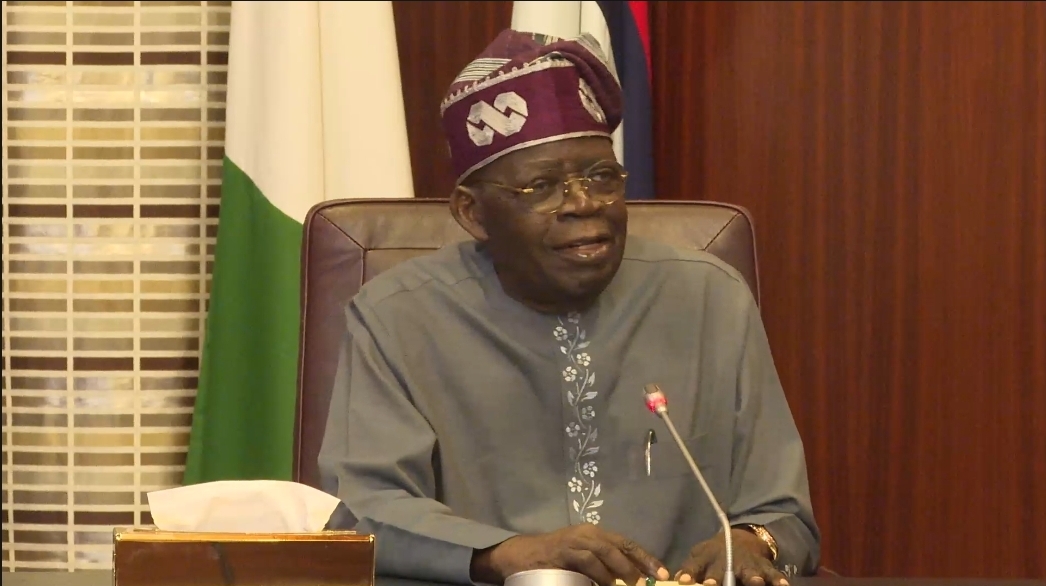
President Bola Ahmed Tinubu has declared that Nigeria must translate the gains of its ongoing economic reforms into lasting prosperity, insisting that the country’s renewed economic direction is driven by a patriotic commitment to build a stronger, more productive and prosperous nation for present and future generations.
The President said his administration was shifting the country’s borrowing strategy from financing short-term fiscal gaps to investing in critical infrastructure capable of expanding economic opportunities, creating jobs and strengthening Nigeria’s competitiveness.
PBAT made this known in an article titled “From Reforms to Delivery: Our Infrastructure Investment and Growth Strategy,” in which he defended the government’s infrastructure financing plans, explaining that responsible borrowing must be measured by the economic value it creates and the opportunities it delivers for Nigerians.
According to him, the difficult economic decisions taken since 2023, including the removal of petrol subsidy, foreign exchange reforms and the modernisation of the tax framework, were necessary steps towards restoring economic stability and laying the foundation for sustainable growth.
The President noted that Nigeria’s real Gross Domestic Product growth reached 4.43 per cent in the second quarter of 2026, while headline inflation declined to 14.63 per cent in September 2026 from 20.98 per cent a year earlier.
He also disclosed that the country’s gross external reserves had risen to $55.1 billion as of October 9, 2026, including approximately $46 billion in net reserves, describing the improving economic indicators as evidence of renewed confidence in the Nigerian economy.
PBAT said: “Since 2023, we have made difficult but necessary decisions: removing the petrol subsidy, unifying the exchange rate, modernising the tax framework, and coordinating action on inflation. These reforms have restored macro balance, quadrupled federation revenue since 2021 and rebuilt the credibility of the State’s balance sheet.”
Defending the administration’s borrowing plans, the President maintained that Nigeria must invest in infrastructure that can generate economic returns over several decades rather than continue borrowing to meet immediate consumption needs.
He explained that the administration’s strategy was to ensure that loans secured for national development were channelled into productive assets capable of generating revenue, supporting businesses and creating employment opportunities.
“Nigeria borrows to invest in roads, ports, rail and power that will generate growth, revenue and jobs for decades. Every Naira and every dollar raised goes to assets that create value, and that value repays the debt,” he stated.
The President identified the Lagos-Calabar Coastal Highway, Sokoto-Badagry Superhighway, Trans-Sahara Superhighway, improvements to the national electricity grid and the modernisation of major commercial ports in Lagos among the administration’s priority infrastructure projects.
He said the projects, alongside investments in healthcare, education and vocational training, would open up economic corridors, connect agricultural and industrial centres, reduce transportation costs and attract greater private-sector investment.
PBAT further explained that the Lagos-Calabar Coastal Highway alone was expected to reduce logistics costs along its corridor by between 15 and 20 per cent and potentially contribute up to two per cent to Nigeria’s GDP through industrial development, trade and tourism.
On employment, he said the coastal highway was projected to generate about 100,000 direct jobs in construction and engineering, as well as more than 150,000 indirect jobs across logistics, materials and related services.
The President stressed that infrastructure development must be viewed beyond the physical construction of roads and bridges, noting that the real value lies in the economic activities, businesses and opportunities that such projects would support.
“We are building more than highways. We are opening economic corridors, connecting markets, supporting industries and reshaping Nigeria’s economic geography. The value of a road extends beyond the completed construction to the farms, factories, businesses and communities it connects,” he said.
Addressing concerns about public debt, Tinubu disclosed that Nigeria’s public debt stood at 35.75 per cent of GDP in the second quarter of 2026, while debt servicing accounted for approximately 65 per cent of revenue in the first half of the year.
He said the government remained committed to fiscal discipline, pointing out that the Federal Executive Council’s economic strategy prohibited deficit monetisation and unfunded commitments during the pre-election period.
The President also explained that the government was extending the maturity profile of its debt, moving away from short-term borrowing towards longer-term financing that better reflects the lifespan of infrastructure projects.
According to him, infrastructure expected to serve the country for several decades should be financed through arrangements that spread repayment obligations over a corresponding period.
On international confidence, PBAT said positive assessments by global credit rating agencies, Nigeria’s restoration to FTSE Russell’s Frontier Market status and its removal from the Financial Action Task Force (FATF) grey list had strengthened the country’s financial credibility.
He noted that these developments, alongside successful Eurobond issuances and improving foreign reserves, were creating opportunities for Nigeria to attract more international investment at competitive financing rates.
The President described the renewed interest of international investors as an opportunity the country must maximise by converting confidence into completed projects, increased productivity and improved living standards.
He said: “The reforms have opened the door to capital; delivery is what will turn that capital into prosperity.”
Tinubu further emphasised that the next phase of the administration’s economic transformation agenda would be judged not by policy announcements but by the quality of projects completed and their direct impact on the lives of Nigerians.
He identified five key priorities set by the Federal Executive Council for the next stage of the economic programme: food affordability and energy price stability; budget harmonisation and fiscal discipline; completion of high-impact projects and investment in critical infrastructure; improved economic policy and regulatory efficiency; and targeted household support alongside investment in human development.
The President maintained that Nigeria’s ambition to build a $1 trillion economy by 2030 could only be achieved through sustained investment, industrialisation, improved productivity and stronger trade infrastructure.
He said the country could not achieve such an ambitious economic target with infrastructure designed for an economy far smaller than its present potential.
“We cannot build a $1 trillion economy with infrastructure designed for an economy a fraction of that size. We are investing in infrastructure for the next 50 years, and our financing strategy must reflect that ambition,” he stated.
Reaffirming his administration’s commitment to responsible borrowing and national development, Tinubu said the ultimate objective was to expand opportunities for future generations rather than mortgage their prospects.
“We are not borrowing against our children’s future. We must invest responsibly to expand opportunities available to them,” the President declared.
He added that every borrowed Naira must be justified by the economic value it creates, stressing that accountability, project completion and measurable results would remain central to the government’s infrastructure delivery agenda.
PBAT said Nigeria’s greatest asset remained its economic potential, adding that the responsibility of his administration was to provide the infrastructure, investment climate and opportunities required to transform that potential into shared national prosperity.