



 There is a reason Borno deserves particular attention whenever the conversation turns to Nigeria’s security and development.
For more than a decade, insurgency has shaped the lives of people across the state. Communities have been displaced, businesses destroyed and economic activities disrupted. Even where normal life has gradually returned, the consequences and impact of those years remain visible.
This makes the conversation in Maiduguri on November 25 particularly significant.
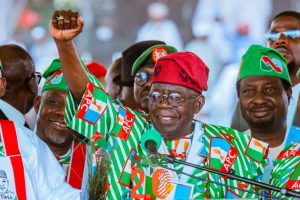
At the #RenewedHopeInBorno presidential campaign rally, Governor Professor Babagana Umara Zulum acknowledged the interventions of President Bola Ahmed Tinubu’s administration in the state. His remarks touched on security, education, healthcare and infrastructure, pointing to the importance of federal support in Borno’s recovery.
But there is a deeper question underneath all these; What does it actually mean for a state like Borno to recover?
THE FIRST RESPONSIBILITY IS SECURITY
For residents of Borno, security is not an abstract policy discussion. It determines whether they can return to their communities, cultivate their farms and go about their daily activities without the constant fear of violence.
A farmer who cannot access his farmland has lost more than the opportunity to cultivate. His household income is affected, his family health declines, food production suffers and the local economy loses a contributor.
This is why the return of peace matters so much.
President Tinubu reaffirmed his administration’s commitment to security in the North-East and directed security agencies to intensify operations against fleeing insurgents. He also addressed the continuing concern over the abducted schoolchildren from Askira Uba, assuring residents that efforts were being made to secure their release.
That assurance matters. So does the reality that the security challenge remains unresolved
The insurgency has not disappeared. Reuters reported on November 25 that attacks, ambushes and bombings by insurgents continue in parts of the region, despite the loss of much of the territory they previously controlled.
There is a difference between making progress against insecurity and bringing it to an end. Borno’s residents understand that difference better than most.
REBUILDING THE FUTURE OF BORNO
One aspect of Governor Zulum’s remarks that deserves attention is the range of federal institutions highlighted during the rally.
The establishment of the Federal University of Agriculture and Entrepreneurship in Bama, the Federal College of Education in Gwoza and the National Orthopaedic Hospital in Azare points to an important dimension of reconstruction.
Borno needs more than a return to the conditions that existed before the insurgency. It needs institutions and opportunities that can support its next phase of development.
Take Bama, for instance. The establishment of a federal university in a community that has experienced years of insurgency carries significance beyond the provision of another higher education institution. It creates the possibility of bringing students, lecturers, employment and commercial activity into an area that has had to rebuild much of its social and economic life.
Gwoza presents a similar opportunity. A Federal College of Education can contribute to the development of teachers and strengthen educational capacity in the region.
These institutions matter, particularly to young people whose educational and economic opportunities have been affected by years of instability.
But their establishment is only the beginning. Their eventual contribution will depend on the quality of their operations, the opportunities they create and the people they are able to serve.
THE ROLE OF INFRASTRUCTURE
Road infrastructure is another important part of the conversation.
In a state where insecurity has disrupted movement and economic activities, roads have a significance that goes beyond transportation. They connect communities to markets, make access to public services easier and create opportunities for commercial activity.
A road connecting two communities can change how people trade, access healthcare and conduct their businesses.
This is particularly relevant in Borno, where reconstruction must address the isolation and economic disruption experienced by many communities.
The relationship between infrastructure and economic recovery is straightforward: people need to move, goods need to reach markets and businesses need an environment in which they can operate.
The challenge is ensuring that these investments translate into actual economic activity.
WHY FEDERAL-STATE COLLABORATION MATTERS
Borno’s reconstruction also brings attention to the importance of cooperation between federal and state governments.
The scale of the challenges facing the state makes it difficult for any one level of government to address them independently.
Security requires coordination between federal security institutions and state authorities. Infrastructure development requires alignment of priorities and resources. Education and healthcare investments must eventually connect with the state’s broader development plans.
This is where institutional collaboration becomes important.
The Federal Government can establish institutions and provide strategic investments, but their impact must connect with the needs of the communities where they are located. The state government also has a responsibility to ensure that development efforts translate into functioning services and opportunities.
For residents, the distinction between federal and state responsibilities is less important than whether government is delivering.
WHAT RENEWED HOPE SHOULD MEAN
The Maiduguri rally was a political gathering, and the administration naturally used the occasion to present its record and reaffirm its commitments.
Yet the circumstances of Borno make the issues discussed there particularly consequential.
For a family displaced by insurgency, renewed hope means being able to return home. For a farmer, it means having access to farmland without fear. For a young person, it means having an opportunity to receive an education and build a future without being forced to look elsewhere.
These are not campaign theories. They are the realities against which the state’s recovery will be experienced.
The interventions highlighted by Governor Zulum provide an opportunity to examine the relationship between security, reconstruction and development. They also raise an important expectation: that the investments being made will be sustained and that their benefits will reach ordinary residents.
Borno has endured a difficult chapter in its history. The task ahead is to ensure that the progress made in restoring security creates room for a more productive and stable society.
The real meaning of renewed hope will be found in what happens after the campaign crowds have dispersed: whether communities remain safe, institutions function, businesses recover and families can make plans for tomorrow without the uncertainty that has defined so much of t heir recent history.
For the people of Borno, that is the future worth working towards.