



The Federal Government and state governments have taken another step towards improving the welfare of Nigerians, with the National Economic Council (NEC) endorsing a 90-day economic action plan aimed at easing the cost of living, improving food affordability, creating jobs and making essential services more accessible to citizens.
The plan, proposed by the Federal Ministry of Finance, is designed to consolidate the gains of President Bola Ahmed Tinubu’s economic reforms and translate ongoing policy measures into tangible benefits for households and businesses across the country.
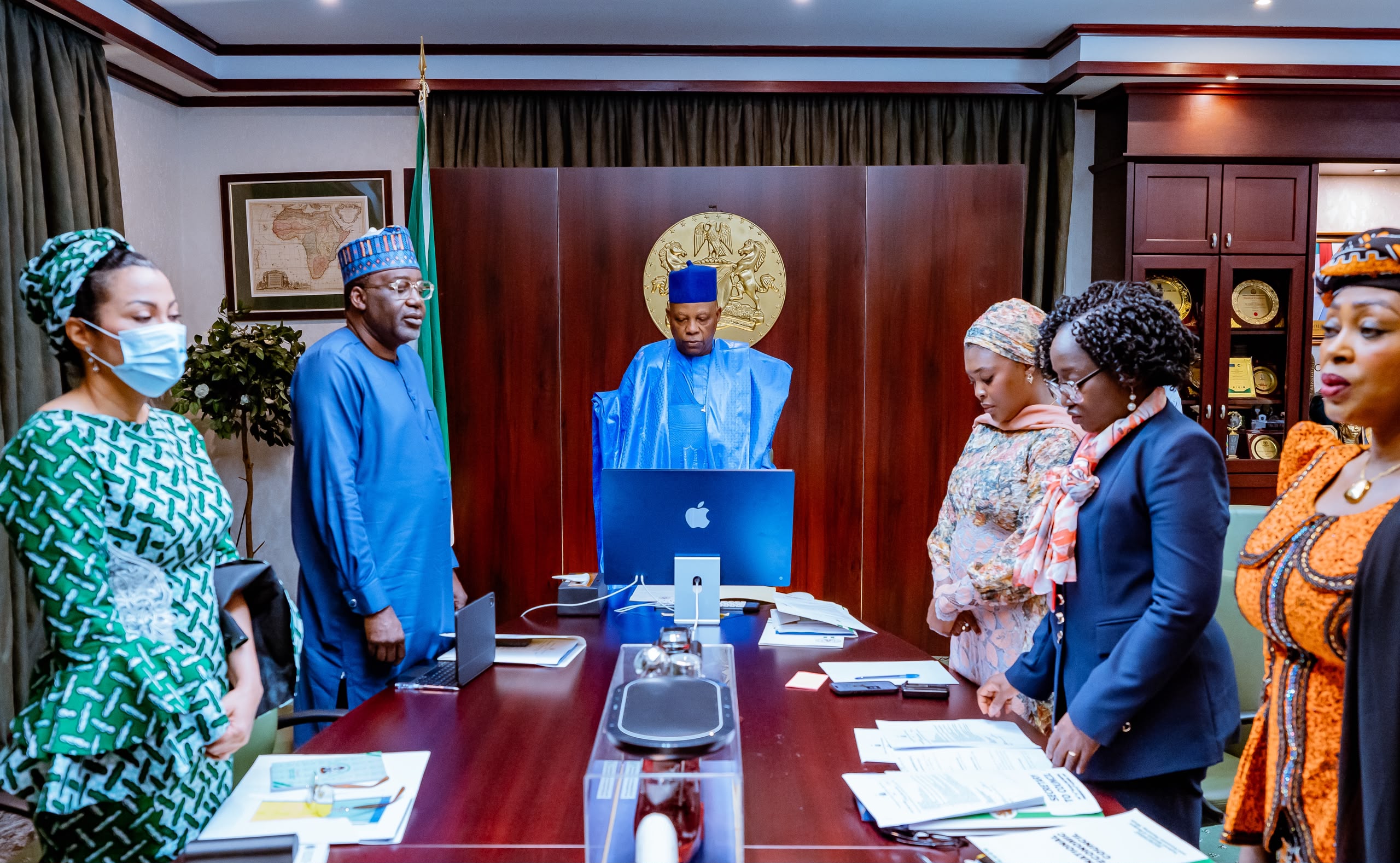
The endorsement came at NEC’s 161st meeting, held virtually on Thursday and chaired by Vice President Kashim Shettima.
The 90-day plan focuses on five priority areas: food affordability, tax harmonisation, completion of high-impact projects, removal of investment bottlenecks and regulated household support.
Council also approved a national dashboard to monitor projects across the federation and promote transparency and accountability in the utilisation of funds, including proceeds from fuel subsidy removal.
Presenting the economic outlook, the Minister of Finance and Coordinating Minister of the Economy, Taiwo Oyedele, expressed optimism about the prospects for further economic recovery, identifying lower inflation and interest rates as key policy objectives towards 2027.
He stressed the need for coordinated action by federal and state governments to ensure that improvements in the wider economy translate into meaningful relief for Nigerians.
Addressing governors and other members of Council, Shettima said the success of the PBAT administration’s reforms must be measured by their impact on the daily lives of citizens, particularly in the areas of employment, transportation, healthcare and financial security.
“The first dividend of prosperity should be the confidence to plan a life. Our task is to make such confidence less dependent on fortune,” the Vice President said.
He urged state governments to align their policies with the Federal Government’s economic objectives, stressing that cooperation among the different tiers of government was essential to delivering better living conditions and strengthening public confidence.
“Our separate jurisdictions must serve a common public interest,” Shettima said, adding that governors must bring their knowledge of local challenges into national policy implementation.
On transportation, the Vice President called for effective implementation of the National Affordable Compressed Natural Gas (CNG) Transit Programme, emphasising that the initiative must reduce the financial burden on commuters rather than focus solely on deploying alternative-energy vehicles.
“The cost of reaching a livelihood should never consume the livelihood itself. The passenger’s experience must guide our ambition, because the value of public transport resides in the journeys it makes possible,” he stated.
NEC subsequently resolved to establish a joint financing framework between the Federal and State Governments to accelerate the deployment of CNG and electric vehicles nationwide.
A committee will coordinate the financing arrangement, engage transport unions and operators, and develop measures to ensure that savings from alternative-energy vehicles are reflected in lower transport fares.
Restating the broader objective of the administration’s economic program, Shettima said President Tinubu had positioned economic reform as a means of achieving national prosperity, adding that state governments must help deliver its benefits to ordinary Nigerians.
“His Excellency, President Bola Ahmed Tinubu, GCFR, has made economic reform the instrument of a larger national ambition. Our contribution must give that ambition social depth and productive strength,” he said.
Meanwhile, NEC received an update on the reported Ebola case in the Federal Capital Territory from the Minister of Health and Social Welfare, Prof. Muhammad Ali Pate, who assured members that Nigeria had the institutional capacity to contain the situation.
Pate outlined measures covering disease surveillance, detection at points of entry, laboratory testing, logistics for essential medical supplies and public communication.
He commended 21 states for updating their preparedness and response plans and urged the remaining 15 states to establish appropriate mechanisms without delay.
Council also directed states to strengthen polio eradication efforts through post-campaign reviews, improved routine immunisation, timely release of counterpart funds and closer coordination with security agencies, particularly in communities affected by insecurity and areas where children were missed during vaccination exercises.
In another resolution, NEC acknowledged the livestock sector’s potential to create jobs, stimulate economic growth and improve livelihoods.
Following a report by its Ad Hoc Committee on Livestock Development, chaired by Kebbi State Governor Nasir Idris, Council called for stronger collaboration between federal and state governments to accelerate reforms and unlock the sector’s economic opportunities.
The decisions underscore NEC’s focus on translating national economic policies into practical interventions that support Nigerian households, strengthen public services and expand opportunities for sustainable livelihoods.